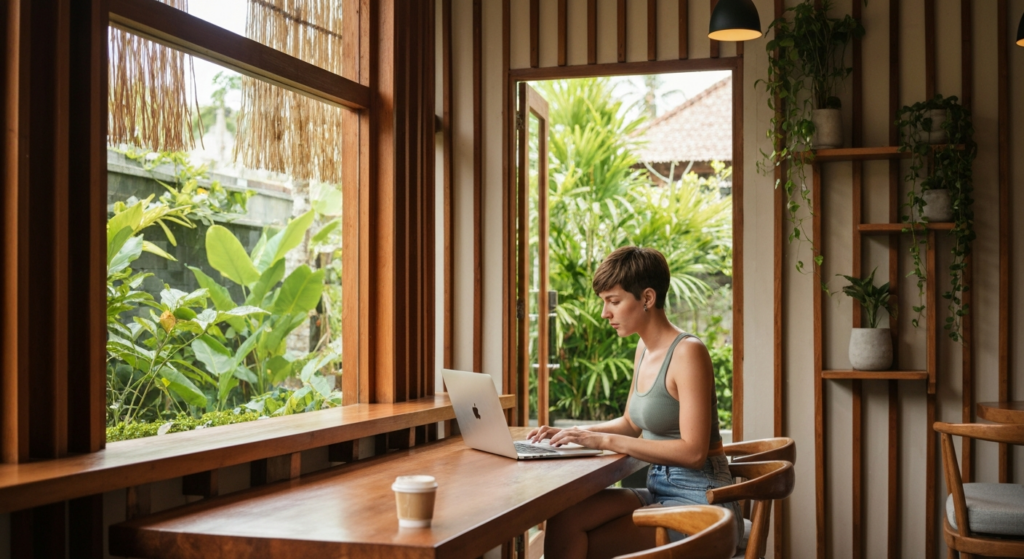
Indonesia’s digital nomad visa landscape has evolved dramatically, offering remote workers and location-independent professionals multiple pathways to live and work legally in one of Southeast Asia’s most desirable destinations. Whether you are drawn to Bali’s vibrant coworking culture, Canggu’s surf-and-startup scene, Ubud’s wellness community, or the emerging digital nomad hub of Labuan Bajo, understanding Indonesia’s visa options is essential for planning your long-term stay in this tropical paradise.
This comprehensive guide covers every visa pathway available to digital nomads in Indonesia in 2026 — from short-term visitor visas and the B211A business visa to the new Digital Nomad Visa, the Second Home Visa, and the premium Indonesia Golden Visa for those ready to make a deeper commitment to Indonesian living.
Indonesia Visa Options for Digital Nomads in 2026
Visa on Arrival (VOA) and E-Visa
The simplest entry point for digital nomads, Indonesia’s Visa on Arrival grants 30-day stays extendable once for another 30 days, totaling 60 days maximum. The electronic visa (e-visa) offers similar terms with online pre-approval convenience. While sufficient for short exploratory trips, the VOA does not technically permit working activities — even remote work for overseas employers — making it a temporary solution rather than a sustainable digital nomad arrangement.
B211A Business and Social Visit Visa
The B211A visa provides 60-day stays extendable up to 180 days total, offering greater flexibility for digital nomads establishing their Indonesian lifestyle. Available through authorized visa agents, the B211A covers social, cultural, and business visit purposes. Many digital nomads use this visa as their primary stay permit while building their understanding of Indonesia before committing to longer-term residency options. Processing requires a sponsor (typically an Indonesian visa agent) and documentation including financial proof and travel insurance.
Indonesia Digital Nomad Visa
Indonesia’s dedicated digital nomad visa — designed specifically for remote workers earning income from overseas employers or clients — represents the government’s recognition of the significant economic contribution digital nomads make to local economies. This visa category provides multi-month stays with tax advantages, acknowledging that digital nomads bring international income into Indonesia’s domestic economy without competing for local employment opportunities. Requirements include proof of remote employment or freelance income, health insurance coverage, and minimum income thresholds that vary by visa duration.
Second Home Visa (5-Year Residency)
For digital nomads with established financial resources (minimum USD 130,000 in liquid assets or equivalent bank balances), the Second Home Visa offers 5-year residency — the longest single-visa stay permit available in Indonesia outside the Golden Visa. This pathway suits location-independent professionals who have built successful remote businesses and seek the stability of multi-year residency without the investment requirements of the Golden Visa program. The Second Home Visa permits holders to live anywhere in Indonesia and re-enter freely throughout the 5-year validity period.
Indonesia Golden Visa — The Premium Pathway
For digital nomads and remote entrepreneurs whose business success enables qualifying investment, the Indonesia Golden Visa represents the ultimate residency commitment. Starting at IDR 2.5 billion (approximately USD 155,000) in qualifying investments, the Golden Visa grants 5-year or 10-year residency with benefits including business establishment rights, multiple entry privileges, and no mandatory stay requirements. Many digital nomads who initially arrive on short-term visas eventually transition to the Golden Visa as their Indonesian roots deepen and their financial capacity grows.
Best Locations for Digital Nomads in Indonesia
Canggu — The Digital Nomad Capital
Bali’s Canggu district has emerged as Southeast Asia’s premier digital nomad hub, featuring dozens of coworking spaces, fast fiber internet, an international food scene, world-class surfing, and a community of thousands of remote workers from every continent. Coworking membership costs range from USD 100-300 monthly for dedicated desks with high-speed internet, meeting rooms, and community events. Canggu offers the rare combination of professional productivity infrastructure, tropical lifestyle, and affordable living costs (USD 1,500-3,000 monthly for comfortable accommodation, food, transportation, and entertainment).
Ubud — Wellness and Creativity
Bali’s cultural heartland attracts digital nomads drawn to wellness practices, creative communities, and the slower pace of rice-terrace-surrounded village life. Ubud’s coworking scene includes unique open-air workspace concepts surrounded by tropical gardens, with proximity to yoga studios, meditation centers, and organic restaurants creating a lifestyle focused on holistic wellbeing alongside professional productivity.
Seminyak — Urban Sophistication
For digital nomads who prefer urban convenience with beach proximity, Seminyak provides upscale restaurants, designer boutiques, beach clubs, and established coworking facilities within a compact, walkable area. Living costs in Seminyak are higher than Canggu or Ubud but deliver a more polished, cosmopolitan lifestyle experience.
Labuan Bajo — The Emerging Frontier
Eastern Indonesia’s gateway to Komodo National Park is developing as an alternative digital nomad destination for those seeking adventure beyond Bali. While coworking infrastructure is still developing, Labuan Bajo offers dramatic natural beauty, world-class diving, and the excitement of being among the first wave of international professionals establishing remote work communities in this emerging destination.
Cost of Living for Digital Nomads in Indonesia 2026
Indonesia’s cost of living remains exceptionally competitive compared to Western countries, making it one of the world’s most financially attractive digital nomad destinations. Monthly budgets for comfortable digital nomad living in Bali range from USD 1,200 for budget-conscious lifestyles to USD 3,000-5,000 for premium living with luxury villa accommodation, private transportation, regular dining out, and wellness activities.
Key expense categories include accommodation (USD 500-2,500/month for furnished rentals), coworking membership (USD 100-300/month), food (USD 300-800/month including restaurant meals), transportation (USD 100-200/month with motorbike rental), health insurance (USD 100-300/month for international coverage), and entertainment and lifestyle (USD 200-500/month). These costs represent significant savings compared to equivalent lifestyles in major Western cities, enabling digital nomads to maintain quality of life while potentially saving more than they would at home.
From Digital Nomad to Indonesian Resident
Many digital nomads arrive in Indonesia planning a few months of tropical remote work and discover a lifestyle they never want to leave. The transition from digital nomad visitor to permanent Indonesian resident follows a natural progression: explore on a VOA, extend with B211A, establish yourself with a Second Home Visa, and ultimately secure permanent residency through the Indonesia Golden Visa. Each step deepens your connection to Indonesia while providing progressively greater legal stability and lifestyle freedom.
Indonesia Golden Visas specializes in guiding digital nomads through this transition journey. Our team understands the unique financial profiles, documentation challenges, and lifestyle priorities of location-independent professionals and structures visa pathways that align with your remote work career trajectory and Indonesian life goals.
Frequently Asked Questions
Can I legally work remotely in Indonesia?
Indonesia’s Digital Nomad Visa and certain other visa categories permit remote work for overseas employers. However, working on a tourist visa technically violates immigration regulations. We recommend securing appropriate visa documentation before beginning remote work in Indonesia to avoid legal complications.
Do digital nomads pay tax in Indonesia?
Indonesia’s tax residency rules apply to individuals spending more than 183 days per year in the country. Tax obligations depend on your visa type, income source, and any applicable double taxation treaties between Indonesia and your home country. Professional tax advisory through our network ensures compliance while optimizing your tax position.
What internet speed can I expect in Bali?
Bali’s major digital nomad areas (Canggu, Seminyak, Ubud) offer fiber internet speeds of 50-100 Mbps at established coworking spaces and many residential addresses. Mobile 4G/5G coverage provides reliable backup connectivity throughout most of Bali. Internet infrastructure continues to improve as Indonesia invests in digital connectivity.